

Every writer who cares about SEO faces the same small daily struggle. Use a keyword too little, and search engines might miss the point of your content. Use it too much, and the writing starts to feel forced and repetitive. Finding that balance takes more attention than most people expect.
The Zuhio Keyword Count Checker was built to make this balance easier to manage. Instead of guessing how often a keyword appears in your content, this simple tool gives you a clear number before you hit publish.
This guide covers everything about the Zuhio Keyword Count Checker in detail. You will learn what the tool is, how it works, its main features, and what it does not do. We will also look at who benefits most from using it and how it compares to other SEO tools on the market.
By the end, you will know exactly how to use the Zuhio Keyword Count Checker as part of your regular content workflow.
This kind of research matters more than people often realize. With so many SEO tools available today, understanding exactly what a tool does, and what it does not do, helps you use it correctly instead of expecting more than it was built to deliver. That is exactly what this guide sets out to do for the Zuhio Keyword Count Checker.
What Is the Zuhio Keyword Count Checker?
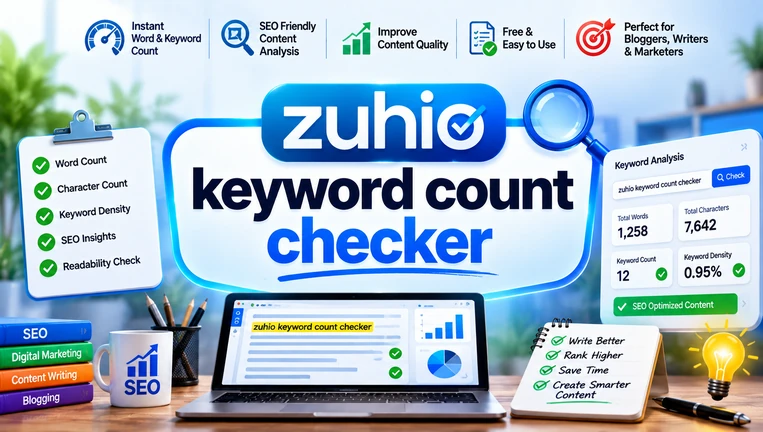
The Zuhio Keyword Count Checker is a free, browser-based tool that measures how often a specific keyword appears in a piece of text. It also calculates keyword density, which shows that count as a percentage of your total word count.
This tool is one of several small, single-purpose tools made by Zuhio, a company known for building simple productivity utilities. Instead of trying to be a full SEO suite, the Keyword Count Checker focuses on doing one job well.
The process is straightforward. You paste your content into the tool, type in the keyword you want to track, and it returns two key pieces of information. First, it shows exactly how many times that keyword appears in your text. Second, it calculates the density percentage, which tells you how much of your overall content that keyword represents.
Because the tool lives directly in your browser, there is no software to download and no complicated setup process. This makes it a convenient option for writers who want a quick check without switching between multiple platforms or tools.
This kind of accessibility matters more than it might seem at first glance. Writers often work under tight deadlines, moving quickly between drafting, editing, and publishing. A tool that requires signup forms, downloads, or a lengthy onboarding process tends to get skipped entirely, even if it offers useful data. By removing these barriers, the Zuhio Keyword Count Checker fits naturally into a fast-paced writing process instead of interrupting it.
Why Keyword Density Still Matters in SEO
Understanding why keyword density still matters helps explain the value of a tool like the Zuhio Keyword Count Checker.
Search engines rely partly on keyword usage to understand what a piece of content is actually about. If your target keyword rarely appears in your article, search engines may struggle to connect your content with relevant searches. On the other hand, repeating a keyword too often can make writing feel unnatural and, in some cases, may be flagged as keyword stuffing.
This creates a balancing act. Writers need to use their target keyword often enough to signal relevance, without overusing it to the point where the content reads poorly for human readers. This balance has become even more important as search engines have grown better at understanding context and meaning, rather than just counting exact keyword matches.
Modern SEO puts more weight on readability, topical relevance, and genuinely helpful content than on hitting an exact keyword percentage. Even so, keyword density remains a useful diagnostic signal. A quick check with a tool like the Zuhio Keyword Count Checker helps writers catch obvious imbalances before publishing, without needing to obsess over hitting a perfect number.
Why Simple SEO Micro-Tools Like Zuhio Are Growing
The rise of small, single-purpose tools like the Zuhio Keyword Count Checker is not random. It reflects a bigger shift in how writers and small businesses approach SEO today.
For years, SEO tools trended toward becoming larger and more complex, bundling dozens of features into a single dashboard. While these comprehensive platforms offer real value for large teams and agencies, they can feel like overkill for an individual blogger or a small business owner who simply wants to check one thing before publishing.
This gap has created demand for lightweight, focused tools that do one job extremely well. Instead of navigating a complicated dashboard to find a simple keyword count, writers increasingly prefer a tool that opens instantly, performs one task, and gets out of the way.
There is also a cost and time factor driving this shift. Full SEO suites often come with a learning curve and a price tag that may not make sense for someone writing a handful of articles per month. A free, single-purpose tool removes both of these barriers, making basic keyword analysis accessible to anyone, regardless of budget or experience level.
The Zuhio Keyword Count Checker fits neatly into this broader trend toward simple, focused micro-tools. Instead of trying to compete with comprehensive SEO platforms, it carves out a specific, useful niche that complements those larger tools rather than replacing them.
Key Features of Zuhio Keyword Count Checker
The Zuhio Keyword Count Checker includes several features built around simple, fast keyword analysis. These features work together to give writers a clear picture of their keyword usage.
Instant Keyword Counting
The core feature of the tool is instant keyword counting. As soon as you paste your content and enter your target keyword, the tool quickly scans the text and returns an exact count of how many times that keyword appears.
Keyword Density Percentage
Beyond a simple count, the tool also calculates keyword density. This percentage shows how much of your total content is made up of your target keyword, giving you a clearer sense of proportion rather than just a raw number.
Total Word Count Display
Alongside keyword counting, it also shows your total word count. This extra detail is useful on its own, especially for writers tracking whether their content meets a certain length requirement.
No Account or Setup Required
One of the most convenient features is accessibility. The tool does not appear to require account creation or any installation. You can open it in your browser and start using it immediately.
Simple, Distraction-Free Interface
It keeps its design minimal. Instead of a cluttered dashboard filled with unrelated features, the interface focuses purely on the keyword checking task, which keeps the process fast and straightforward.
Support for Long-Tail Keywords
The tool is not limited to single-word keywords. Writers can also enter longer keyword phrases, which is useful given how much modern SEO relies on long-tail keyword targeting rather than single, highly competitive terms.
How to Use the Zuhio Keyword Count Checker
Using the Zuhio Keyword Count Checker is a simple, three-step process that fits easily into most writing workflows.
Paste Your Content
The first step is pasting your full article or content into the tool’s text field. This can be a blog post, a product description, or any other piece of written content you want to analyze.
Enter Your Target Keyword
Next, type in the specific keyword or keyword phrase you want to measure. This should be the main focus keyword you are optimizing your content around, though you can check secondary keywords as well by running the process again.
Review the Results
Once you submit your content and keyword, the tool displays your keyword count, density percentage, and total word count. From here, you can decide whether your keyword usage feels balanced or needs adjustment.
This simple workflow makes it easy to run quick checks at any stage of the writing process, whether you are midway through a draft or doing a final review before publishing.
What the Zuhio Keyword Count Checker Does Not Do
Understanding the limitations of this tool is just as important as understanding its features. Setting realistic expectations helps you use it correctly within a broader SEO strategy.
It does not analyze backlinks. If you are looking for information about which sites link back to your content, this tool will not provide that data.
It also does not perform a technical SEO audit. Elements like page speed, mobile responsiveness, site structure, and technical errors fall outside what this tool is designed to check.
The tool does not suggest content topics or provide keyword research data either. It will not tell you which keywords to target or how much search volume a particular term receives. It also does not analyze headings, title tags, or meta descriptions directly within your content.
In short, it is a focused diagnostic tool for keyword frequency and density, not a comprehensive SEO platform. Recognizing this upfront helps you avoid expecting features the tool was never built to offer.
Who Should Use Zuhio Keyword Count Checker?
It is built with a fairly specific audience in mind, though its simplicity makes it useful for a wide range of content creators.
Bloggers: writers publishing regular blog content who want a quick way to check keyword balance before hitting publish.
Freelance writers: Professionals writing SEO content for clients who need a fast way to verify keyword usage without a full SEO subscription.
Content editors: Editors reviewing drafts from multiple writers who want a simple, consistent way to check keyword balance across different pieces of content.
Small business website owners: Business owners managing their own website content who want a lightweight tool without investing in a full SEO suite.
This audience focus reflects the tool’s overall design, which favors speed and simplicity over deep, comprehensive SEO analysis.
It is also worth noting who may find this tool less useful. SEO professionals managing large-scale campaigns, technical audits, or competitor analysis will likely need more comprehensive platforms alongside a simple tool like this one.
Benefits of Using Zuhio Keyword Count Checker
There are several clear advantages for writers who use the it as part of their content process.
Saves Editing Time
Instead of manually counting keyword mentions or estimating density by eye, the tool provides instant, accurate numbers, saving writers valuable editing time.
Helps Avoid Keyword Stuffing
By clearly showing density percentage, the tool makes it easier to spot when a keyword has been overused, helping writers avoid content that feels forced or repetitive.
Supports Natural, Readable Content
Because the tool highlights both underuse and overuse, it helps writers find a natural middle ground, supporting content that reads well for humans while still signaling relevance to search engines.
Fast, No-Setup Workflow
Since there is no account creation or software installation required, writers can use the tool immediately whenever they need a quick check, without any added friction.
Useful for Quick Multi-Draft Comparisons
Writers working through multiple drafts can use the tool repeatedly to compare keyword balance across different versions, helping them fine-tune content before publishing.
Is Zuhio Keyword Count Checker Accurate and Reliable?
This is a fair question to ask about any SEO tool, especially a simple one focused on a narrow task.
It is generally reliable for the specific task it performs, which is counting keyword occurrences and calculating density based on the text you provide. Since the calculation is based directly on your submitted content, the resulting numbers tend to be accurate for that specific purpose.
However, it is important to remember that keyword density is only one small piece of a much larger SEO picture. Different sources suggest different density guidelines, with some recommending a rough one to two percent range, while others argue that natural writing matters more than hitting any specific number.
A few good habits can help writers get the most reliable value from a tool like this:
- Treat the density percentage as a general guideline, not a strict rule to follow exactly.
- Prioritize natural, readable writing over forcing a keyword to fit a specific target number.
- Use the tool as one part of a broader content review process, not your only editing step.
- Combine keyword checks with attention to reader experience and overall content quality.
These habits apply broadly to any keyword density tool, not just this one, and they help writers use the data wisely rather than treating it as an absolute formula.
Building these habits into a regular editing routine does not take much extra effort. Over time, they help writers develop a better instinct for natural keyword placement, using the tool’s numbers as a helpful reference point rather than a rule that overrides good judgment about how the content actually reads.
Zuhio Keyword Count Checker vs Other SEO Tools
Comparing it with other SEO tools helps clarify exactly where it fits within a broader content workflow.
Scope of Analysis: Full SEO suites like Ahrefs and SEMrush cover backlinks, technical audits, competitor analysis, and keyword research. It focuses only on keyword frequency and density.
Integration: Tools like Yoast SEO integrate keyword checks directly into the WordPress editing environment. Zuhio operates as a standalone browser tool, which means switching between your writing platform and the checker separately.
Complexity: Comprehensive platforms often come with a learning curve and multiple dashboards. it is designed for simplicity, with no learning curve required to get started.
Depth of Data: More advanced tools provide search volume, competition data, and content scoring. Zuhio provides raw keyword count and density numbers only, without any additional research data.
Speed: Because it focuses on one task, it tends to deliver results faster than navigating through a full-featured SEO platform for the same simple check.
This comparison shows that the Zuhio Keyword Count Checker fills a specific gap for writers who want a fast, no-frills keyword check. It is not designed to replace comprehensive SEO platforms, but rather to serve as a quick, supporting tool within a broader content strategy.
This is not really a case of one type of tool being better than the other. Full SEO suites serve teams and businesses that need deep, ongoing analysis across many aspects of a website. A simple tool like Zuhio serves individual writers and small teams who mainly need a fast, reliable keyword check without the overhead of a larger platform. Many content creators actually use both types of tools together, depending on the scale of the project they are working on.
How to Get Started with Zuhio Keyword Count Checker
If you want to start using the Zuhio Keyword Count Checker as part of your writing process, a simple approach works well.
- Open the tool in your browser whenever you finish a draft of your content.
- Paste your full article or content into the text field provided.
- Enter your primary target keyword to check its count and density.
- Review the results and adjust your content if the keyword feels underused or overused.
- Repeat the process for secondary keywords if you are tracking more than one term.
This step-by-step approach helps you build a consistent habit of checking keyword balance before every piece of content goes live.
Tips for Getting the Most Out of Zuhio Keyword Count Checker
A few simple habits can help writers get more value from the Zuhio Keyword Count Checker over time.
- Run a check midway through writing, not just at the very end, to catch imbalances earlier.
- Use the tool alongside a readability check, since natural flow matters as much as keyword count.
- Avoid chasing an exact density percentage, and instead use the number as a general reference point.
- Check both your primary keyword and a few closely related secondary terms for a fuller picture.
- Pair this tool with a broader SEO platform if you need deeper insights beyond keyword frequency.
These habits help writers turn a simple diagnostic tool into a genuinely useful part of their regular content workflow.
Conclusion
It offers a genuinely simple way to check keyword balance before publishing content. Instead of trying to be a full SEO platform, it focuses on doing one job well, giving writers a quick, accurate snapshot of keyword frequency and density.
Like any single-purpose tool, it works best when used as part of a broader content strategy rather than as a complete SEO solution on its own. Testing it with a few pieces of content is a good way to see how it fits into your specific writing workflow.
As more writers look for fast, no-setup tools that support natural, reader-friendly content, simple utilities like the it are likely to remain a useful part of everyday SEO practice.
For more guides breaking down platforms, tools, and digital trends like this, you can find more helpful articles on securlypass.blog. We regularly cover technology and content tool reviews to help readers understand new resources before adding them to their workflow.
Good SEO writing has always been about balance, and a tool like this simply makes that balance easier to see. Used thoughtfully, alongside your own judgment about readability and reader value, the Zuhio Keyword Count Checker can become a small but reliable part of how you prepare content before it goes live.
Frequently Asked Questions
Is Zuhio Keyword Count Checker free to use?
Yes. The tool is free and browser-based, requiring no payment to check keyword count and density.
Do I need to create an account to use Zuhio Keyword Count Checker?
No. The tool does not appear to require account creation or installation to use.
What is a good keyword density percentage?
Opinions vary, though many suggest a rough one to two percent range as a general guideline, not a strict rule.
Can Zuhio Keyword Count Checker analyze long-tail keywords?
Yes. You can enter longer keyword phrases, not just single words, for a more detailed check.
Does Zuhio Keyword Count Checker replace full SEO tools like Ahrefs?
No. It focuses only on keyword frequency and density, not backlinks, technical audits, or keyword research.

1 Comment
Pingback: Latest Feedbuzzard Com: Complete Guide and Key Updates