

Walking through a school hallway during class hours used to mean spotting a student clutching a small paper slip, signed by a teacher, allowing them to be out of the classroom. That simple system worked for decades, but it also came with real problems. Passes got lost, copied, or forged. Teachers had no easy way to know how many students were out of class at once.
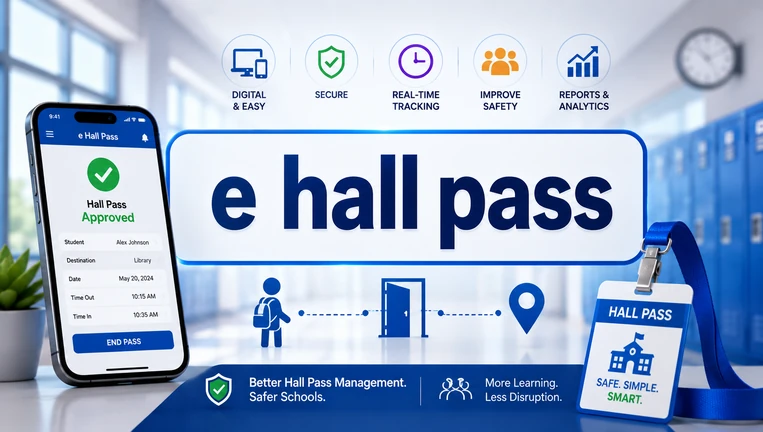
E Hall Pass is the digital solution schools are turning to instead. It replaces the paper slip with a system that runs on computers, tablets, and phones, giving schools a faster and more organized way to manage student movement throughout the building.
If you are a teacher, administrator, or parent trying to understand what e hall pass actually does, this guide will walk you through everything in simple, clear language. We will cover what it is, how it works, its main features, and the benefits and concerns schools should know about. On securlypass, we like breaking down school technology tools in a way that is easy to understand, and this guide follows that same approach.
By the end of this article, you will have a complete picture of how e hall pass fits into modern classroom management, without needing to dig through technical documentation yourself.
Digital classroom tools have become a normal part of everyday school life over the past several years, from online grading systems to attendance software. Hall pass management is simply the latest area where schools are moving away from paper-based processes toward something faster, more organized, and easier to review.
What Is E Hall Pass?
E Hall Pass is a digital hall pass system built for schools, most commonly used in middle schools and high schools. Instead of writing out a paper pass by hand, teachers and students use an online platform, accessed through a computer or mobile device, to request, approve, and track passes.
At its core, e hall pass replaces a process that has existed in schools for generations. The paper pass system relied entirely on trust and manual tracking. A teacher would write a student’s name, destination, and time on a slip of paper, and that was often the only record of where a student was supposed to be.
E hall pass modernizes this process. Every pass request, approval, and return is recorded electronically. This creates a digital record that staff can review at any time, rather than relying on scattered paper slips that are easy to lose or misplace.
This shift also changes how accountability works within a school. Instead of a teacher needing to remember exactly who left the room and when, the system automatically keeps that information organized and accessible. This reduces the mental load on teachers who are already managing a classroom full of students throughout the day.
Why Schools Are Switching from Paper Passes
Paper hall passes come with a long list of practical problems. They can be copied or forged fairly easily. They provide no easy way to see how many students are out of class across the entire building at once. And they leave almost no useful record for reviewing patterns of movement over time.
Digital systems like e hall pass solve many of these issues directly. Because everything is logged electronically, it becomes far more difficult for students to misuse the system, and staff gains a much clearer, real-time picture of student movement across the school.
This shift toward digital hall passes also reflects a broader trend in education technology. Schools have increasingly adopted digital tools for attendance, grading, and communication, and hall pass management is simply another area where paper-based processes are being replaced by more efficient digital alternatives.
This broader trend is partly driven by how much easier digital records are to search, review, and analyze compared to paper documentation. A stack of paper hall pass slips from a given week is difficult to review for patterns, while a digital system can instantly show which students, destinations, or time periods generate the most pass requests.
How E Hall Pass Works
Understanding the basic mechanics of e Hall Pass helps explain why so many schools have adopted it as their preferred hall pass management tool.
Requesting and Approving a Pass
The process usually starts with a student requesting a pass through the platform, either from a classroom device or their own phone, depending on what the school allows. The request typically includes the destination, such as the restroom, nurse’s office, or library.
Once a request is submitted, a teacher reviews and approves it, often with just a single tap or click. Some destinations may require a different staff member’s approval, such as a request to visit the counselor’s office or nurse.
This approval step is an important part of the system. It keeps teachers in control of student movement, while removing the manual work of writing out a physical pass by hand. The entire request and approval process usually takes only a few seconds to complete.
This quick approval process is one of the reasons teachers often prefer the digital system over paper passes once they become familiar with it. Instead of pausing a lesson to physically write out a pass, a teacher can approve a request with minimal disruption, allowing the class to continue with barely any interruption to the lesson flow.
Tracking Student Movement
Once a pass is approved, the system tracks the student’s status until they return to class. This includes recording how long the student has been out, and in some cases, sending an alert if a student has been out longer than expected.
This tracking function is one of the most valuable parts of the system for school staff. Rather than relying on memory or a written note, administrators and teachers can check the platform at any time to see who is currently out of class, where they are supposed to be, and how long they have been gone.
This kind of ongoing visibility also helps identify patterns over time. If a particular student consistently takes longer than expected to return from a pass, staff can notice this trend through the system’s records rather than needing to rely on scattered individual observations from different teachers throughout the week.
It is worth noting that e hall pass tracks the destination a student reports and the time they leave and return, similar to what a school would already record using paper passes. It generally does not rely on GPS or other physical location tracking technology to monitor a student’s exact whereabouts.
This distinction matters for parents and students who might assume the system works like a location tracking app on a phone. In reality, the system is closer to a smarter version of the traditional paper pass, capturing the same basic information, just in a format that is far easier to organize, search, and review after the fact.
Key Features of E Hall Pass
E Hall Pass includes several features designed to give schools more control over student movement while reducing the administrative burden on teachers.
Pass Limits and Restrictions
One of the most useful features is the ability to set limits on how many passes a student can use during a given day or class period. Schools can configure daily limits for the entire student body, adjust limits by grade level, or apply individual restrictions for specific students who may need closer monitoring.
This kind of flexibility allows schools to tailor the system to their specific needs. A school dealing with frequent hallway congestion, for example, might set stricter limits during certain class periods to reduce the number of students moving through hallways at once.
Restrictions can also be applied to specific locations. If a particular room or resource is already at capacity, the system can prevent additional students from receiving a pass to that location until space becomes available again.
This capacity feature is particularly useful for spaces like the library, computer lab, or counselor’s office, where too many students arriving at once can create its own set of problems. By automatically managing how many students can be sent to a location at any given time, the system helps prevent overcrowding before it becomes an issue.
Real-Time Visibility for Staff
Administrators and teachers can view real-time data showing which students are currently out of class, where they are headed, and how long they have been gone. This kind of visibility was simply not possible with paper-based systems, where information was scattered across individual classrooms.
This feature becomes especially valuable during an emergency situation. If a school needs to quickly account for every student’s location, having a centralized digital record makes that process far faster and more reliable than trying to gather information from individual paper logs across the building.
Real-time visibility also supports better day-to-day decision-making. If administrators notice unusual patterns, such as a large number of students requesting passes during a specific time, they can identify and address the issue more quickly than they would through manual observation alone.
For example, if a school notices that pass requests spike right after lunch every day, administrators might investigate whether that pattern points to a scheduling issue, a need for additional supervision during that period, or simply a natural rhythm of the school day that does not require any changes at all. Either way, having clear data makes that kind of investigation far easier than relying on guesswork.
Benefits of Using E Hall Pass
Understanding the practical benefits of e hall pass helps explain why so many schools have chosen to move away from paper-based systems entirely.
Improved Student Safety
Knowing where every student is supposed to be at any given moment is a meaningful safety improvement for any school. In the event of an emergency, administrators can quickly reference the system to understand who might be outside of a classroom and where they were headed.
This kind of accountability also discourages misuse of hall passes in general. When students know their movement is being recorded, they are generally less likely to wander to unauthorized areas or spend excessive time away from class.
Improved safety extends beyond emergencies as well. Consistent tracking helps staff notice patterns, such as a student who frequently requests passes around the same time each day, which can prompt a helpful conversation between staff and the student if needed.
This kind of early pattern recognition can sometimes point to something worth addressing, whether that is a simple scheduling adjustment or a sign that a student may need additional support. Rather than waiting for a problem to become obvious, digital tracking gives staff the ability to notice smaller patterns much earlier than a purely manual system would allow.
Less Classroom Disruption
Paper hall passes often required teachers to pause their lesson, write out a physical pass, and hand it to a student, all while the rest of the class waited. E hall pass streamlines this process significantly, often reducing the entire approval step to just a few seconds.
This reduction in disruption adds up over the course of a school day. With multiple pass requests happening across dozens of classrooms, saving even a small amount of time per request can meaningfully increase overall instructional time across the school.
Reduced disruption also benefits classroom flow in a more general sense. Teachers can maintain their lesson’s momentum without needing to stop and manually process a written request in the middle of a class discussion or activity.
This benefit becomes especially noticeable in classes with a lot of movement, such as science labs or elective courses where students frequently need to step out for supplies or equipment. A faster approval process means less time spent waiting and more time spent actually engaged in the lesson itself.
Common Concerns About E Hall Pass
As with any technology adopted in schools, e hall pass raises a few common concerns among parents, teachers, and students. Addressing these directly helps set realistic expectations about what the system does and does not do.
One frequent concern involves privacy. Parents sometimes worry that a digital system might track a student’s exact physical location using GPS or similar technology. In general, these systems record the destination a student reports and the timestamps of their pass, similar to a paper-based system, rather than tracking a student’s precise real-time location through device-based tracking.
Another common concern relates to how the system affects students who may need more flexibility, such as those with medical conditions requiring frequent restroom access. Most digital hall pass systems, including e hall pass, allow schools to configure individual student settings, which can address these specific needs on a case-by-case basis.
This kind of individual configuration is an important safeguard. Without it, a rigid, one-size-fits-all pass limit could unintentionally create problems for students who genuinely need more frequent access to certain locations. Schools that plan for these exceptions ahead of time tend to avoid unnecessary friction once the system is in daily use.
Some teachers and students have also raised concerns about the approval process itself. If a teacher does not respond quickly to a pass request, a student may end up waiting longer than they would with a simple paper pass. This is generally addressed through staff training and clear expectations around response times, rather than being an unavoidable flaw of the system itself.
Setting clear internal expectations, such as responding to requests within a certain number of minutes, can help schools avoid this issue altogether. Many schools find that once teachers get used to checking the platform regularly throughout a lesson, response times become quick and rarely cause noticeable delays for students.
A few points worth keeping in mind when evaluating any digital hall pass system include:
- Understanding exactly what data the system does and does not collect
- Reviewing how individual student needs and exceptions are handled
- Considering how quickly staff are expected to respond to pass requests
- Checking how the system integrates with existing school technology
Tips for Schools Implementing E Hall Pass
Schools considering or currently rolling out e hall pass can benefit from a thoughtful implementation process rather than simply switching systems overnight.
Clear communication with staff, students, and parents before launch tends to reduce confusion significantly. When everyone understands how the new system works and why it is being introduced, the transition tends to go far more smoothly than if the change is introduced with little explanation.
This kind of upfront communication also helps address concerns before they turn into larger complaints. Parents who understand exactly what information the system does and does not collect are far less likely to worry about privacy issues once the system is actually in use.
Training for teachers is also an important step. Since teachers are responsible for approving pass requests throughout the day, making sure they are comfortable with the platform before it goes live helps avoid unnecessary delays or frustration during the first few weeks of use.
It also helps to start with reasonable default settings, such as general pass limits, and adjust them gradually based on real classroom experience. Schools that fine-tune their settings over the first few weeks, rather than trying to get everything perfect immediately, tend to have a smoother overall rollout.
This gradual approach allows schools to observe how the system actually performs in real classroom conditions before locking in permanent rules. A setting that looks reasonable on paper might need adjustment once real usage patterns become clear, and building in that flexibility from the start avoids unnecessary frustration for both staff and students.
Finally, schools should plan for how to handle exceptions from the start. Students with specific medical or personal needs should have a clear, documented process for adjusting their individual settings, rather than leaving those decisions to be figured out on a case-by-case basis after problems arise.
Having this process documented ahead of time also protects both students and staff. When exceptions are handled through a clear, consistent policy rather than informal decisions made in the moment, it becomes much easier to ensure that every student’s needs are being met fairly and appropriately.
Conclusion
E Hall Pass represents a meaningful shift from traditional paper-based hall passes to a more organized, digital system. By allowing schools to track requests, set limits, and view real-time data on student movement, it addresses many of the practical problems that came with older, paper-based approaches.
At the same time, understanding what the system does and does not track, along with planning carefully for individual student needs, helps schools implement it in a way that genuinely improves both safety and classroom efficiency.
For more explainers on school technology tools and digital classroom systems, keep exploring guides like this one on securlypass. Understanding the tools shaping today’s classrooms helps teachers, administrators, and parents make more informed decisions together.
Frequently Asked Questions (FAQs)
What is E Hall Pass used for?
It is used to request, approve, and track hall passes digitally. Schools use it instead of paper-based passes. It helps manage student movement during class time.
Does E Hall Pass track student location?
It generally records the destination a student reports, not GPS location. This is similar to how paper passes worked. It does not use device-based location tracking.
Can students request a pass from their phone?
Many schools allow pass requests from a mobile device. This depends on the specific school’s settings. Some schools may limit requests to classroom devices only.
Is E Hall Pass only for high schools?
No, it is commonly used in both middle schools and high schools. Some elementary schools use similar systems as well. Usage depends on each school’s specific needs.
What happens if a pass request is denied?
The student is simply not granted permission to leave class at that time. Teachers can explain the reason directly. The student can typically request again later if needed.

1 Comment
Pingback: Zuhio Keyword Count Checker: Simple Tool for SEO Analysis